Gas Station Coffee and Free Maps: Why Rest Stops Are the Most Underrated Part of Any Road Trip
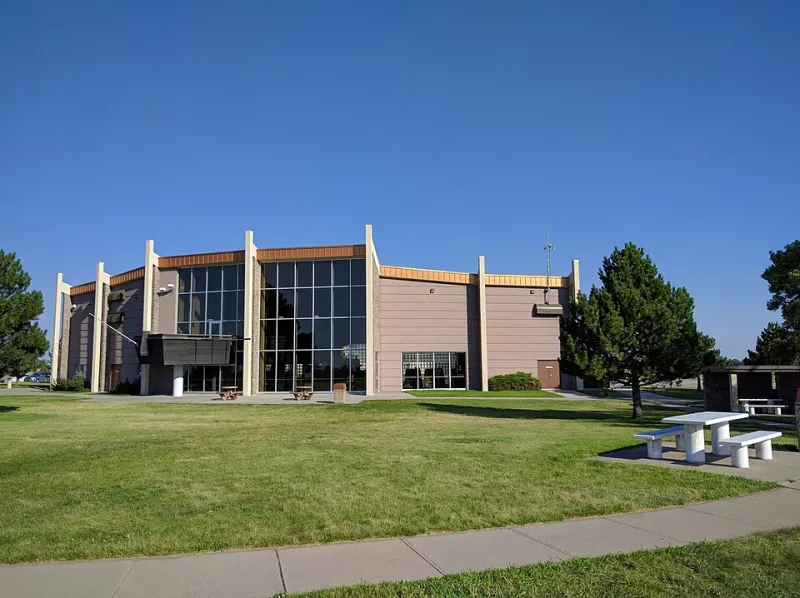
Photo: Runner1928, CC BY-SA 4.0, via Wikimedia Commons
Somewhere around mile 340 on I-70 in Kansas, sitting on a bench outside a welcome center shaped like a giant covered wagon, eating gas-station peanuts and watching a family of five argue cheerfully about who forgot the sunscreen, I had a thought that felt borderline revolutionary:
The rest stop is not the boring part of the road trip. The rest stop IS the road trip.
Hear me out. We spend so much time treating pit stops as failures — as lost minutes, as bladder emergencies, as things to minimize. But I just spent two weeks driving from Ohio to Colorado and back, and I made a rule for myself: every stop gets treated like an actual destination. I rated them. I lingered. I talked to strangers. And honestly? The stops I remember more vividly than some of the attractions I planned months in advance.
The Tier System Nobody Asked For
Let me be clear: this is not rigorous science. This is one woman with a road-trip snack bag and opinions. But after roughly two dozen stops, patterns emerged, and I can now confidently sort America's roadside breaks into tiers.
S-Tier: The Welcome Center That Tries Too Hard (In a Good Way). Colorado's welcome center near the state line had free coffee, actual leather chairs, clean bathrooms that smelled like cedar, and a volunteer named Diane who spent ten minutes telling me about a scenic overlook I'd otherwise blown past. I nearly cried. This is what happens when a state decides hospitality is a value proposition.
A-Tier: The Solid Regional Player. Kansas rest stops deserve their flowers. Wide open, well-lit, vending machines stocked with local stuff, and picnic tables positioned so you can actually see the horizon. When your state is mostly sky, you lean into the sky. Respect.
B-Tier: The Competent Commuter. Most stops live here. Clean-ish bathrooms, adequate parking, a bulletin board with flyers for a pancake breakfast three counties away. Not memorable. Not offensive. The workhorse of the highway.
C-Tier: The Vibe Is Off. Dim lighting, one flickering fluorescent tube, a bathroom door that requires a physics explanation. Nothing's wrong exactly, but you find yourself doing the math on whether you can hold it to the next exit.
D-Tier: The Ghost Stop. Closed welcome centers, chained gates, a lone port-a-potty baking in the sun. There's a special loneliness to a rest area that time forgot. I stopped at one in Missouri that had a single truck, a vending machine that only accepted quarters, and a hand-lettered sign reading "BATHROOM OPEN — ASK AT OFFICE." There was no office.
Reframing the Break Changes the Whole Drive
Here's what actually surprised me: when I started treating stops as destinations, my whole relationship with long-distance driving shifted. I wasn't white-knuckling it to the next exit anymore. I was curious about it.
I started timing my breaks to hit interesting ones. I'd pull up Google Maps the night before and see which welcome centers had good reviews (yes, rest stops have reviews — the internet is beautiful). I learned that state welcome centers almost always have free maps, and that the paper map is genuinely better than your phone for the "what's within 50 miles of here?" question.
I also started budgeting real time for stops. Twenty minutes minimum. Long enough to walk around, use the facilities without sprinting, and — this is key — eat something sitting down. The road-trip sandwich eaten at a picnic table with a view of a hay field tastes objectively better than the same sandwich hunched over the steering wheel at a red light.
Talk to the Volunteers, Seriously
If there's one actionable tip from this whole experiment, it's this: state welcome centers are usually staffed by retired locals who have encyclopedic knowledge of their region and nothing but time. Diane in Colorado told me about a burger joint in a town of 400 people. A gentleman in Missouri redirected me around road construction AND gave me a hot tip about a free audio tour. These people are national treasures working on a volunteer basis.
The algorithm will tell you the top five attractions. The welcome center volunteer will tell you the thing locals actually do on a Saturday.
Your Pit Stops Are a Feature, Not a Bug
I think a lot of us treat road trips as a series of sprints between destinations — the drive as an obstacle between us and the vacation. But when you build in good breaks, the drive becomes part of the trip. You sample local snacks. You stretch your legs in a new state. You collect a weird assortment of paper maps and brochures for places you'll never go, which is honestly one of life's great free pleasures.
So on your next long drive, flip the script. Don't ask "how far can I go before I have to stop?" Ask "what's the best stop within the next hour?" Look up the welcome centers. Find the ones with reviews mentioning "free coffee" or "beautiful views." Give yourself permission to waste twenty perfectly good minutes.
The destination will still be there. But the rest stop with the rocking chairs and the lady who tells you about the overlook? That's a one-time offer.
Happy trails — and stretch your legs. That's an order.