Yellowstone in November, Sedona in July: What Happens When You Show Up 'Wrong'
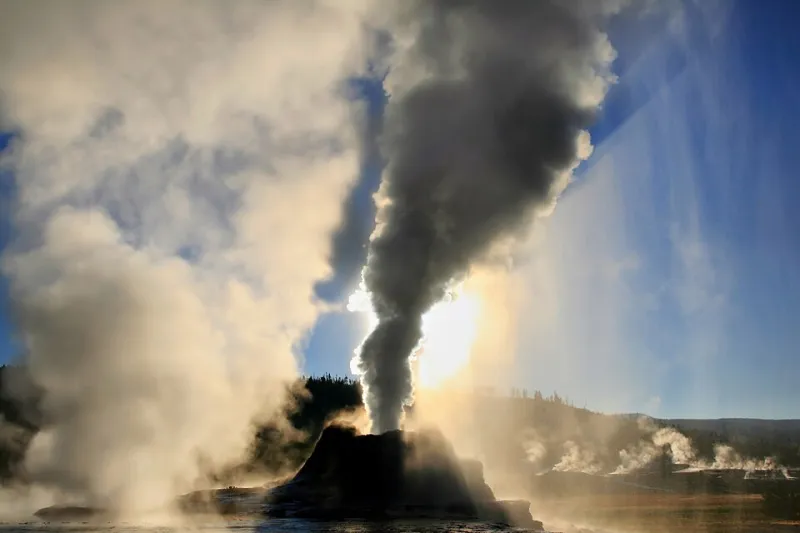
Photo: Brocken Inaglory. Original uploader was Brocken Inaglory, CC BY-SA 3.0, via Wikimedia Commons
There's a moment in every trip-planning spiral where you land on the destination's official website and read the same sentence: Best visited May through September.
I've learned to read that sentence as a suggestion from someone who doesn't know me. Because some of the most memorable trips I've taken in this country happened in the months the brochures quietly skip. Not because I'm some hardcore adventurer — I'm the person who packs a backup hoodie 'just in case' — but because showing up during the 'wrong' season changes the whole personality of a place.
Here are three of my favorites, with the honest trade-offs included, because nobody should sell you on a February beach trip without mentioning the wind.
Yellowstone in November: The Park With the Volume Turned Down
Most people's Yellowstone experience involves a traffic jam caused by a bison standing in the road. Mine involved a frost-covered meadow, one other car in the parking lot at Artist Point, and a coyote trotting across the road like he had somewhere to be.
By early November, most park roads start closing for the season, and the summer crowds are long gone. What's left is quieter, stranger, and honestly more moving. Steam rises harder off the geysers in cold air. Elk hang out right in the Mammoth area like they pay rent. The light in late fall is low and golden all day, which means every photo looks like you know what you're doing.
The honest logistics: You're not driving the full Grand Loop — the Beartooth Highway and several roads close by early November, and everything except the road between the North and Northeast entrances shuts down for the winter. Base yourself in Gardiner or Mammoth, keep your plans flexible, and check the road status page the night before like it's your morning news. Pack layers you'd wear for a football game in Green Bay, because mornings are legitimately cold.
The Outer Banks in February: Yes, Really
I'll admit this one sounds like a punishment. A beach town in winter? But the Outer Banks off-season is its own genre of trip — one built around empty beaches, lighthouses with no lines, and seafood shacks where the person taking your order is very possibly the person who caught your lunch.
The winter light on the coast is dramatic in a way summer never manages: steel-gray water, big skies, dunes with nobody on them. Wild horses on the northern beaches are easier to spot without a dozen Jeeps around. And the winter rental rates are low enough that a oceanfront place with a hot tub costs about what a motel room costs in July.
The honest logistics: Some restaurants and attractions close for the season, so check hours before you get attached to a specific crab cake. Wind is real — bring a windproof jacket, not just a warm one. And if you're dreaming of swimming, recalibrate: this is a walk-on-the-beach-with-coffee trip, not a boogie-board trip. Jockey's Ridge State Park at sunset in winter is one of the best free views on the East Coast.
Sedona in July: Monsoon Season Is the Secret
Everyone says Sedona in summer is a bad idea, and the daytime part is true — the red rocks radiate heat like a pizza oven by noon. But July is also monsoon season, which means afternoon thunderheads stack up over the buttes, the desert smells like rain and juniper, and the whole landscape gets a light show that no springtime postcard can match.
The trick is flipping your schedule. Hike at dawn — I did Devil's Bridge at 5:30 a.m. and had it mostly to myself, which in high season is basically impossible. Spend midday somewhere air-conditioned or in Oak Creek. Then head out around 4 p.m. as the clouds build, and watch the storm roll in from somewhere safe. Sunset after monsoon rain, with wet rock glowing red, is the single best light I've ever seen in the Southwest.
The honest logistics: Check the forecast daily, because flash floods are a genuine danger in slot canyons and low crossings — never hike narrow drainages when storms are possible. Start every hike by 6 a.m., carry more water than seems reasonable, and know that trails like Cathedral Rock get slick when wet. The reward for all this caution: trails you'd otherwise share with hundreds of people, often nearly empty.
Why the 'Wrong' Time Works
Here's what all three trips have in common: the destination didn't get worse, it just got quieter and more honest. No lines, no parking stress, no jockeying for the photo spot. Locals have time to talk. Prices drop. The place gets to be itself.
You do need to trade certainty for flexibility — closed roads, dark restaurants, weather that keeps you on your toes. But if your travel style can bend a little, the off-season might be the best deal in American travel. The chart says May through September. The chart doesn't know you.